

 The United States military is working toward an ambitious preparedness goal: ensuring major military installations can continue essential operations for extended periods, potentially 90 days without outside support.
Think about that for a moment.
These are military installations with equipment, trained personnel, specialized resources, and budgets far beyond those available to the average household.
Yet military planners recognize how vulnerable even well-equipped installations can become when electrical grids, water systems, communications networks, and supply chains are disrupted.
The effort is part of an initiative called FORTRESS America, which focuses on improving military readiness and resilience during prolonged emergencies.
Now consider a different question.
If the military is preparing for the possibility of operating independently for 90 days, how long could you and your family survive under similar circumstances?
This isn’t about suggesting that the Pentagon knows something catastrophic is about to happen. Preparing for a prolonged emergency doesn’t mean one is inevitable.
But there’s an enormous difference between having a few weeks of emergency supplies and being capable of sustaining your household for three full months.
And that’s what we’re going to explore.
We’ll examine eight critical areas of preparedness. As you work through them, consider your existing supplies, skills, equipment, and backup plans.
At the end of this article, you’ll also find a free downloadable resource guide featuring helpful articles, instructional videos, and other educational materials covering all eight areas. It’s designed to help you identify weaknesses in your current preparations and take practical steps toward strengthening them.
You may discover weaknesses you haven’t considered. Or perhaps you’ll find that you’re better prepared in some areas than you realized.
Either way, the goal is simple: identify what might fail first and determine how to improve it before an emergency happens.
## 1. Food and Water: Could Your Supplies Last 90 Days?
Food and water are two of the most basic requirements for survival, yet sustaining a household for three months can be far more challenging than it initially appears.
Most households probably have at least some extra food available. But have you actually calculated how long that food would last?
Could you feed everyone in your household for 90 days without another trip to the grocery store?
And we’re not just talking about calories.
A long-term food supply should provide adequate nutrition and variety. You’ll also need a practical way to prepare that food if conventional utilities aren’t available.
For example, storing hundreds of pounds of rice and beans might sound like an excellent preparedness strategy. But those foods require water and energy to prepare.
Do you have enough of both?
### What Happens When Your Stored Food Runs Out?
If your stored food won’t last the full 90 days, how do you intend to supplement it?
 Gardening, raising small livestock, hunting, and fishing are possibilities. However, each presents challenges that need to be considered beforehand.
A vegetable garden doesn’t produce food overnight. Depending on the season and what you’re growing, it could take weeks or months before you’re able to harvest anything.
Raising chickens or other livestock also requires feed, water, shelter, and ongoing care. Can you provide those necessities without depending on outside supplies?
Hunting and fishing present their own difficulties, particularly if large numbers of people are attempting to obtain food from the same limited resources.
These options can help supplement your food storage, but they shouldn’t be treated as guaranteed replacements without practical experience.
### The 360-Gallon Water Challenge
Water may prove even more difficult than food.
Federal emergency preparedness guidance recommends storing at least one gallon of water per person per day as a starting point.
For a family of four, the calculation looks like this:
| Time Period | Water Needed |
|—|—:|
| 1 day | 4 gallons |
| 7 days | 28 gallons |
| 30 days | 120 gallons |
| 60 days | 240 gallons |
| 90 days | 360 gallons |
That’s 360 gallons of water for a family of four, using only the basic planning figure.
Hot weather, physical exertion, medical needs, and sanitation requirements could increase that amount considerably.
Most households simply don’t have that much water stored.
So, where will you get additional water?
Perhaps you have access to a well, nearby lake, river, pond, or rainwater collection system.
But access to water doesn’t automatically mean access to safe drinking water.
A well that depends on an electric pump may become useless during an extended power outage unless you have another way to operate it.
Rainwater collection depends on rainfall, suitable storage, and treatment methods.
And natural water sources may contain biological or chemical contaminants that require different treatment methods. Not every filter can make every water source safe to drink.
### Don’t Overlook the Logistics of Collecting Water
Suppose you plan to collect water from a nearby lake or river.
For a family of four, the basic requirement is four gallons every day.
Four gallons weigh a little more than 33 pounds, excluding the containers.
Collect enough for three days, and you’re transporting approximately 100 pounds of water.
Now consider the distance.
Is the water source a quarter mile away? A mile? Even farther?
Will you carry the water by hand, use a wagon, or depend on a vehicle that requires fuel?
And can you repeat that process every few days for three months?
Having a water source is one thing. Having a dependable way to collect, transport, and safely treat that water for 90 days is something entirely different.
Your 90-day challenge: If grocery stores closed and running water stopped tomorrow, how long could your household realistically remain fed and hydrated?
## 2. Power and Fuel: What Happens When Your Backup Systems Fail?
Electricity has become so integrated into everyday life that we often overlook just how much we depend on it.
Consider your refrigerator, freezer, well pump, communications equipment, medical devices, and battery chargers.
How many of those systems are essential to your household?
And how much electricity would you actually need to operate them?
The goal during an extended emergency isn’t necessarily to maintain every modern convenience. It’s to preserve the systems necessary for safety and survival.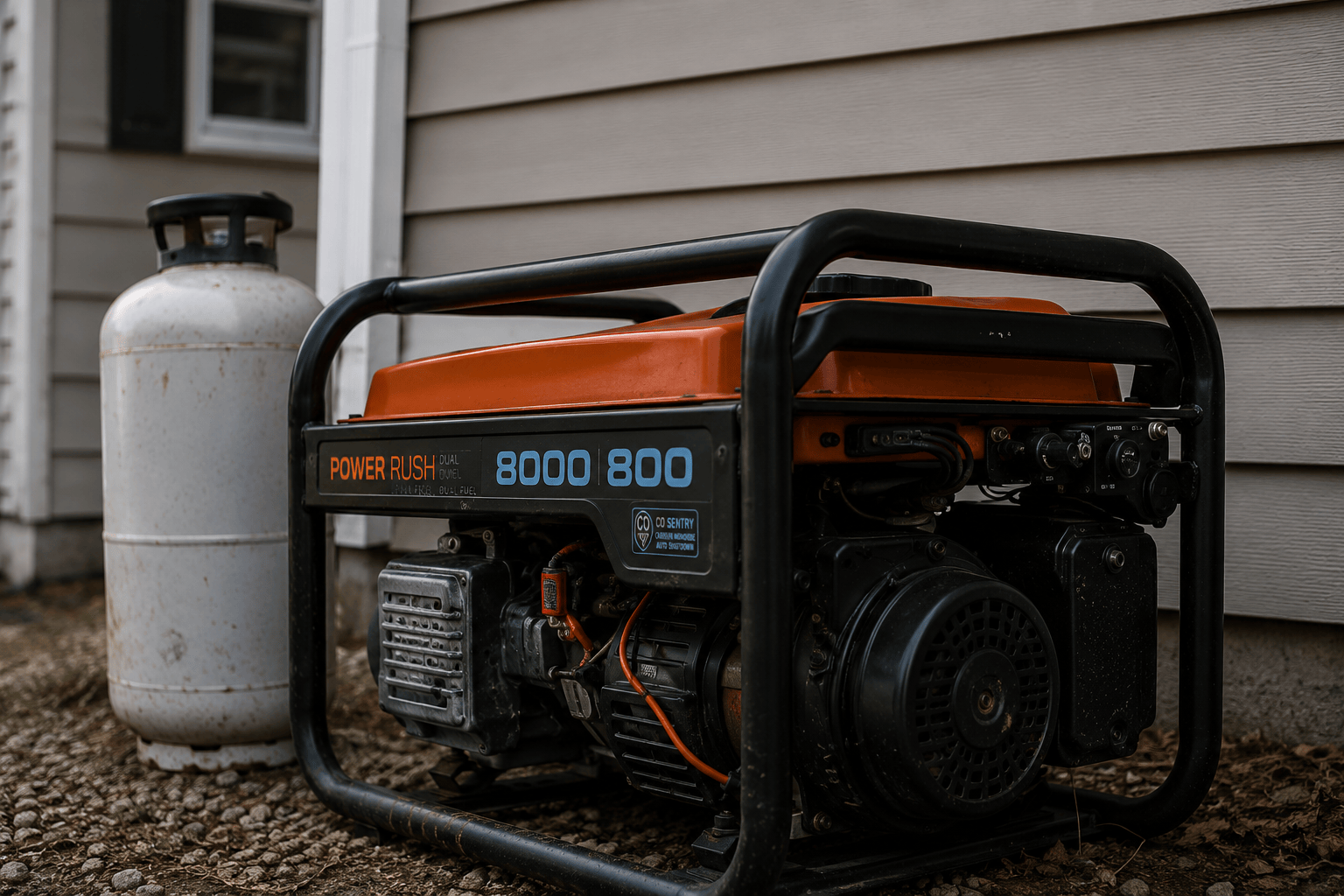
### Generators Have Limitations
Portable generators can be valuable during temporary power outages.
However, depending on a gasoline- or propane-powered generator for 90 days creates several challenges.
Fuel supplies are finite. Generators require maintenance. Mechanical components can fail.
And even if you’ve stored an adequate amount of fuel, there’s no guarantee the generator will remain operational throughout the emergency.
A generator should be operated only in a safe outdoor location, away from windows, doors, vents, and other openings.
You also need to consider competing fuel requirements.
If you depend on propane for electricity, cooking, and heating, those activities may all draw from the same limited supply.
### Is Solar Power a Better Long-Term Solution?
Solar panels paired with battery storage may offer a more sustainable option for providing limited electricity over an extended period.
But these systems also have limitations.
How much electricity can your system generate? How much can your batteries store?
Can your equipment meet essential needs during several consecutive cloudy days?
And what happens if an inverter, battery, or another critical component stops working?
Even renewable power systems require planning, maintenance, and realistic expectations.
### Prepare to Function Without Electricity
Perhaps the most important question is what happens if all your backup systems eventually fail.
If the freezer stops operating, what happens to the food inside?
If the electric well pump becomes unusable, how will you obtain water?
If someone relies on electrically powered medical equipment, have you developed a contingency plan with their healthcare provider?
A household that can meet basic needs with minimal electricity—or temporarily without it—may be better positioned for a prolonged emergency.
Your 90-day challenge: Could your household continue functioning if conventional electricity disappeared and your backup power eventually failed?
## 3. Temperature and Shelter: Could Your Home Remain Safe?
Maintaining a safe indoor temperature can become one of the greatest challenges during an extended emergency.
And the risks depend heavily on where you live and the season.
### Surviving a Prolonged Winter Outage
Imagine losing your primary heating system during the coldest part of winter.
How would you keep your household warm?
A wood-burning stove or fireplace might provide an alternative heat source, but only if the equipment is properly installed and maintained.
Do you have enough firewood?
Are your chimney and heating equipment in good condition?
Do you have working carbon monoxide alarms and adequate fire protection?
You may not need to heat your entire home. Maintaining a smaller, safe living area could reduce the amount of fuel needed.
However, alternative heating equipment must be suitable for its intended indoor use. Never improvise with outdoor cooking or heating devices inside an enclosed living space.
### What About 90 Days of Extreme Heat?
Now consider the opposite situation.
What if the emergency occurs during the hottest months of summer?
Without air conditioning, indoor temperatures can rise to dangerous levels, particularly for older adults, young children, and people with certain medical conditions.
Can you reduce heat entering your home by blocking direct sunlight?
Are there cooler areas of the house that could provide temporary relief?
Can you safely ventilate the building when outdoor temperatures permit?
Would your drinking-water reserves accommodate increased hydration needs during prolonged hot weather?
And if indoor conditions become unsafe, do you have a contingency plan for reaching a safer location?
Surviving a few uncomfortable days without heating or air conditioning is one thing.
Maintaining safe living conditions for three months is an entirely different challenge.
Your 90-day challenge: Could you maintain safe indoor temperatures during a prolonged summer or winter emergency without conventional heating or air conditioning?
## 4. Communications and Intelligence Gathering: How Will You Know What’s Happening?
During an extended emergency, obtaining reliable information can become just as important as storing adequate supplies.
Under normal circumstances, we have almost immediate access to news, weather forecasts, traffic conditions, and emergency warnings.
But what happens when the internet stops working, cellular networks become unavailable, and television broadcasts are interrupted?
How will you know what’s happening beyond your own neighborhood?
Are supply routes reopening? Are new hazards developing? Are conditions improving or deteriorating?
And how will you determine whether the information you’re receiving is accurate?
### Build Multiple Sources of Information
A battery-powered AM/FM radio can provide access to local news and emergency announcements when broadcasters remain operational.
A NOAA Weather Radio can provide weather forecasts and emergency alerts when the relevant transmission systems are functioning.
Amateur radio equipment may offer additional communications and information-gathering capabilities.
However, owning equipment isn’t the same as knowing how to use it.
Do you know which local frequencies or radio networks to monitor?
Have you tested your equipment?
Can you provide power to your communications systems for an extended period?
And do you understand the difference between receiving information and being able to transmit messages?
A basic radio may allow you to receive emergency broadcasts, but it won’t necessarily allow you to contact someone for assistance or obtain specific information about another community.
That distinction could become increasingly important as an emergency continues.
Your 90-day challenge: If the internet, cellular networks, and television disappeared tomorrow, could you maintain reliable awareness of local conditions for the next three months?
## 5. Medical Needs and First Aid: What Happens When Help Isn’t Available?
Most preparedness-minded households probably have at least one first aid kit.
But what can you actually do with it?
Bandages, antiseptics, and other medical supplies are important. However, the knowledge and training needed to use them appropriately are just as valuable.
Over a 90-day period, numerous medical situations could arise.
Someone might suffer a deep cut while cutting firewood. A family member could develop an infection. Someone could fall and suffer a broken bone.
Under normal circumstances, you would seek professional medical attention.
But what if emergency medical services are delayed or unavailable?
### Medical Training Is a Preparedness Investment
Do you know how to control serious bleeding?
Can you recognize warning signs of infection or other medical emergencies?
Have you received hands-on first aid or CPR training?
Watching instructional videos and purchasing a trauma kit can introduce useful concepts, but neither replaces proper training.
And remember that medical supplies are consumable.
A first aid kit may contain enough materials to treat one significant injury. But what happens if another emergency occurs several weeks later?
Will you have enough supplies remaining?
### Don’t Forget Existing Medical Conditions
An extended emergency becomes even more complicated when someone in the household depends on prescription medication, specialized equipment, or ongoing medical care.
How much medication do you normally have available?
Does any medication require refrigeration?
Can you maintain essential medical equipment without conventional electricity?
These questions should be addressed with healthcare professionals before an emergency, particularly when interruptions in treatment could be dangerous.
Even seemingly minor problems can become serious when professional care is difficult to obtain.
An untreated dental problem, for example, could develop into a significant complication during a prolonged disruption.
You don’t have to become a medical professional to improve your household’s preparedness.
But you should understand your capabilities, recognize your limitations, and obtain appropriate training.
Your 90-day challenge: If someone in your household became seriously ill or injured on day 45, how prepared would you be to respond while professional medical assistance was delayed?
## 6. Security and Protection: Can You Keep Your Household Safe?
Suppose you’ve managed to store enough food, water, fuel, and other necessities to sustain your family for 90 days.
Can you protect those resources and the people depending on them?
Most homeowners take a certain level of security for granted.
We lock our doors, use exterior lighting, perhaps rely on security cameras, and know emergency services are usually a phone call away.
But how effective would your security measures remain during a prolonged disruption?
### Evaluate Your Home’s Physical Security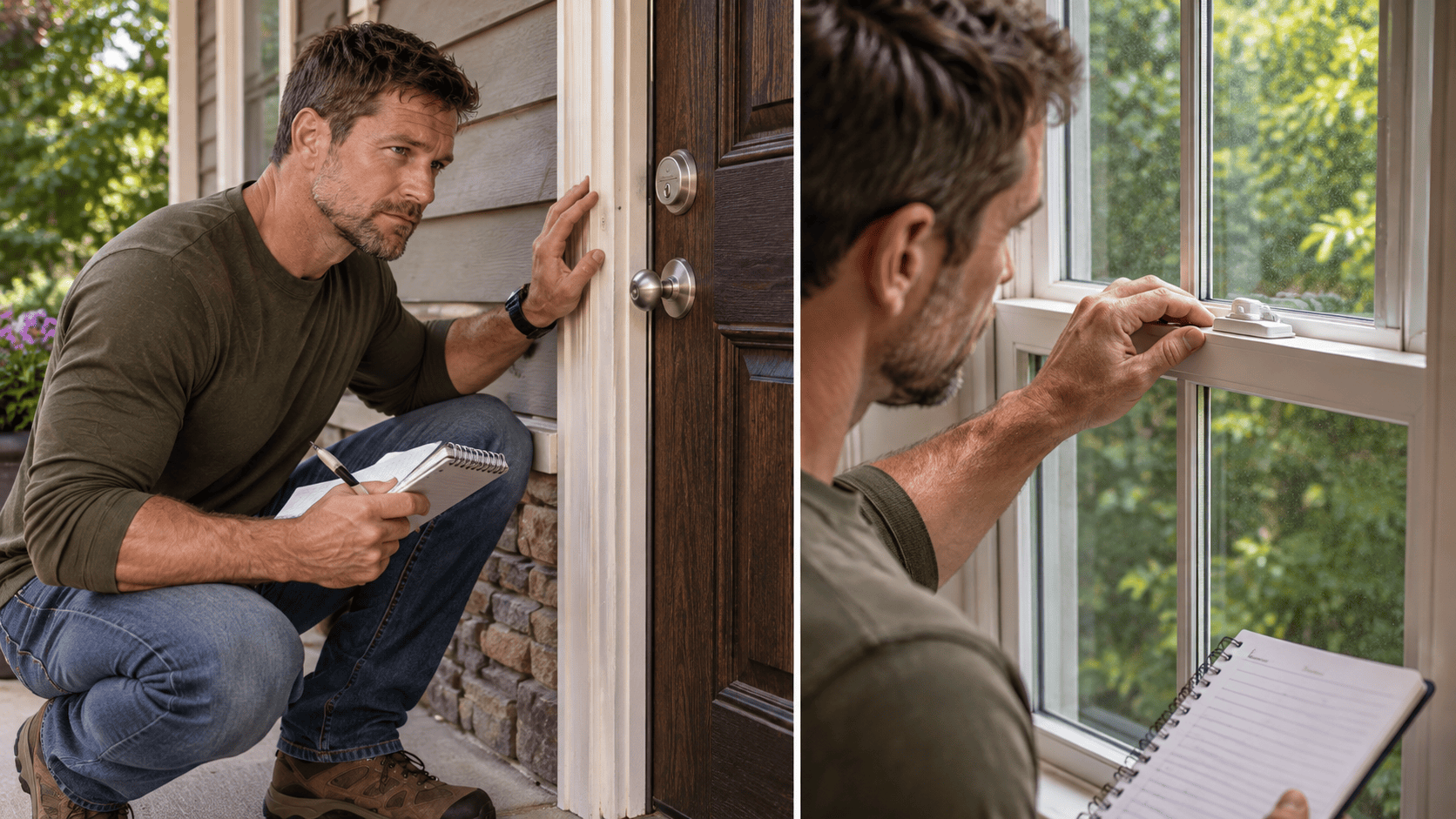
Have you assessed the condition of your exterior doors, locks, windows, and other potential entry points?
Would your current security measures remain useful without electricity or internet access?
Have you established basic safety procedures with everyone in the household?
It’s also worth considering how your activities might attract unwanted attention.
Running a noisy generator, displaying valuable supplies, or illuminating your home when the surrounding neighborhood is completely dark could make your property stand out.
That doesn’t mean you should live in fear. It means understanding how everyday activities can affect your security.
### Security Extends Beyond Your Property
Remember the earlier discussion about collecting water?
If you need to travel to a lake or river every few days, those trips may expose you to additional risks.
And conditions may change as the emergency continues.
The first week could look very different from day 30 or day 60.
Resources may become more limited, and some people may become increasingly desperate.
That doesn’t mean everyone around you becomes a threat.
In fact, trusted neighbors and community cooperation may provide some of your greatest security advantages.
### Avoiding Confrontation Is Your Primary Goal. Firearms Are The Backup Plan
 If firearms are part of your preparedness strategy, safe handling, responsible storage, maintenance, and proper training are essential.
Simply owning a firearm doesn’t mean you’re prepared to use it responsibly during a dangerous situation.
Equally important is understanding when not to use one.
Whenever possible, avoidance, de-escalation, and maintaining distance from potential threats should remain your first priorities.
A well-developed security plan should focus on preventing dangerous situations rather than seeking confrontations.
Your 90-day challenge: Could you keep your household and supplies secure for three months if electronic security systems were unavailable and law enforcement response was significantly delayed?
## 7. Sanitation and Hygiene: The Overlooked Survival Challenge
Food, water, and electricity usually receive the most attention in emergency preparedness discussions.
But sanitation may become one of the most serious challenges during a prolonged infrastructure failure.
Consider how often you depend on modern plumbing and waste-management systems.
You flush a toilet, wash your hands, take a shower, or place garbage at the curb without giving those services much thought.
Now imagine all of them disappearing for 90 days.
### What Happens When Toilets Stop Working?
If your home loses running water or the sewer system becomes unusable, what’s your alternative?
Do you have an emergency toilet arrangement?
More importantly, do you know how to safely contain and manage human waste?
Waste disposal methods must account for local conditions, public-health guidance, and the risk of contaminating nearby water sources.
Improper waste handling can introduce serious health hazards into your living environment.
And over three months, the amount of waste generated by even a small household can become substantial.
### Household Garbage Doesn’t Stop Accumulating
What happens when garbage collection stops?
Food scraps, packaging, and other household waste will continue accumulating.
Do you have a way to store waste securely?
Can you prevent insects, rodents, and other pests from accessing it?
Poor waste management can quickly create problems that affect food storage, water safety, and household health.
### Hygiene Requires Additional Supplies and Water
Soap, toilet paper, feminine hygiene products, cleaning supplies, and other necessities deserve a place in your long-term preparedness plans.
You’ll also need ways to wash your hands, clean dishes, and maintain personal hygiene without conventional plumbing.
Remember the earlier water calculations?
The basic one-gallon-per-person-per-day figure is only a starting point.
Depending on your sanitation arrangements, maintaining proper hygiene could require considerably more water.
And these problems don’t remain isolated.
Improper waste disposal can contaminate water. Poor hygiene can contribute to illness. Rodents and insects may threaten food supplies.
Having 90 days of stored supplies won’t accomplish much if your home becomes unsafe or unsanitary.
Your 90-day challenge: Could your household maintain a sanitary living environment for three months without running water, sewer service, or garbage collection?
## 8. Community, Skills, and Mental Resilience: Why Supplies Aren’t Enough
Let’s return to the military installations that inspired this challenge.
Those installations aren’t relying entirely on stored supplies.
They also have personnel with a variety of specialized skills.
Mechanics, medical personnel, communications specialists, logistics professionals, and security personnel all contribute to keeping an installation functioning.
Now consider your own household.
Even with three months of supplies, can you realistically handle every problem that might arise?
What happens when equipment breaks and you don’t know how to repair it?
What if someone develops a medical problem that exceeds your training?
This is why building a trusted network can become so valuable.
### The Problem With the Lone-Wolf Approach
I’m not a big believer in the lone-wolf approach to long-term survival.
Having the ability to take care of yourself is important. But expecting to handle every possible problem independently for three months may not be realistic.
Do you know your neighbors?
Have you developed relationships with people who possess skills that complement your own?
Perhaps someone has extensive gardening experience.
Another person may know how to repair engines or electrical equipment.
Someone else might have medical training or experience organizing supplies.
But here’s an equally important question:
What do YOU bring to the table?
You might have extra food, water, or equipment to share.
Those supplies have value, but eventually they can be consumed.
Skills, knowledge, and practical experience may continue benefiting a community long after stored supplies begin running low.
A strong network isn’t about finding people who will take care of you.
It’s about building relationships with people who can depend on one another.
And those relationships need to be developed before an emergency occurs.
### The Mental and Emotional Challenge of 90 Days
Three months of uncertainty, disrupted routines, limited resources, and constant stress could take a significant toll on any household.
How would your family handle that pressure?
Could everyone maintain useful routines?
How would you manage disagreements, frustration, isolation, and fatigue?
Would stress interfere with your ability to make sound decisions?
Simple routines, shared responsibilities, opportunities for rest, and supportive relationships may help households navigate difficult circumstances.
And having trusted people nearby could reduce some of the emotional burden.
Ultimately, surviving for 90 days isn’t simply about the supplies you’ve accumulated.
It’s also about your abilities, judgment, relationships, and capacity to adapt when circumstances change.
Your 90-day challenge: Do you have the skills, relationships, and emotional resilience necessary to get through a prolonged emergency without trying to handle everything alone?
## The Final Challenge: What Would Fail First?
After examining these eight areas of preparedness, it’s time to ask yourself one important question.
If your household had to survive the next 90 days without outside support, could you do it?
And if the answer is no, what would fail first?
Would it be your drinking-water supply?
Your ability to prepare food?
A lack of dependable backup power?
Your heating or cooling arrangements?
Perhaps your greatest weakness is medical preparedness, sanitation, communications, or the absence of a trusted support network.
Whatever the answer, identifying that weakness is the first step toward improving it.
You may need to purchase additional supplies, learn a practical skill, improve an existing backup plan, or establish relationships with others in your community.
And you don’t necessarily have to address every shortcoming at once.
Start with the weakness that could create the most serious consequences for your household.
Work toward improving it, then move to the next one.
Because preparedness isn’t simply about how much equipment you own or how many supplies you have stored away.
It’s about whether your household can continue meeting its basic needs when the systems you normally depend on are no longer available.
### Free Resources to Strengthen Your Preparedness
To help you address potential weaknesses, Plan & Prepared has assembled a free downloadable 90-Day Preparedness Resource Guide.
The guide brings together educational articles, instructional videos, and additional resources covering the critical areas discussed in this article.
Whether you’re looking to improve your water preparedness, develop reliable backup power, learn new skills, or strengthen your household’s emergency plans, these resources provide a starting point.
Download the Free 90-Day Preparedness Resource Guide — Click Here
You can also watch our companion video for a more detailed discussion of the 90-day challenge.
Watch: Can You Survive for 90 Days? — Click Here For The YouTube Video
### How Prepared Are You?
I’d like to hear from you.
After considering these eight areas, what’s the one part of your preparedness that you most need to improve?
Share your thoughts in the comments below.
You don’t have to solve every problem overnight.
But you can identify your biggest weakness and start doing something about it today.
Stay Safe Out There!!

 |
Prepper News Wire
All the newest prepper articles and videos from across the internet in one place.
|
CLICK HERE → |
Follow Plan and Prepared on various social media platforms for practical tips, new content, and real-world preparedness advice. Stay Safe Out There!


Get practical, no-nonsense preparedness tips, new articles and videos, plus free resources like the 72-Hour Emergency Checklist.
No selling. No sharing. No spam. Ever.
-

By: James L
A former outdoor survival instructor, I am a retired deputy sheriff who worked in a suburb of Oklahoma City. I was the operational commander of a multi-jurisdictional, multi-agency warrant task force. We specialized in locating and arresting dangerous and violent criminals. I was also a member of the USMS fugitive task force for 2 years. James has over 25 years experience in law enforcement, and is also a certified police trainer.
-


-
How to Escape a Riot Without Making Yourself a Target
7 Things to Keep in Your Vehicle Before Winter Hits
How to know when it is time to bug out (Updated)
6 Mistakes That Can Make You a Target During SHTF
Alpha-Gal Syndrome and Tick Bites: What You Should Know