

 Whether you’re traveling two miles from home or 200 miles, winter weather can turn a routine drive into a dangerous situation faster than you might think. Having a properly stocked winter vehicle emergency kit can make a significant difference when temperatures drop and unexpected problems arise.
In December 2022, a devastating blizzard struck western New York, including the Buffalo area. High winds, heavy snowfall, and whiteout conditions made roads impassable, leaving hundreds of vehicles abandoned and making it difficult for emergency responders to reach stranded motorists.
Dozens of people lost their lives in the Buffalo area, while the broader winter storm system claimed more than 100 lives across the United States.
The lesson is simple: You don’t have to be hundreds of miles from civilization to find yourself in a dangerous winter emergency.
You could be just a few miles from home.
Before the first freeze arrives, here are seven things worth keeping in your vehicle.
1. Extra Clothing for Unexpected Cold
The important word here is extra.
I’m talking about clothing that stays in your vehicle regardless of what you’re wearing when you leave the house.
Even if you’re already wearing a winter coat, that doesn’t necessarily mean you’re dressed to spend several hours outdoors or possibly spend the night in a disabled vehicle.
Personally, I keep a water-resistant coat in my truck and in my wife’s car, with a stocking cap and gloves tucked into the pockets. That way, everything stays together.
Around the first part of October, I also add a heavier hoodie, which generally stays in the vehicle through late March.
The goal isn’t necessarily to carry the heaviest winter coat you own. It’s to give yourself options through layering.
Layers allow you to adjust your clothing depending on the temperature, wind, moisture, and your level of physical activity.
For example, if you’re sitting in a disabled vehicle, you may need every layer available. But if you’re outside digging your vehicle out of the snow, removing a layer may help prevent overheating and sweating.
Staying warm also means staying dry.
Choose Your Clothing Materials Carefully
Different materials behave differently when exposed to moisture.
- Cotton: Absorbs and retains moisture, making it a poor choice for insulation when wet.
- Wool: Manages moisture relatively well and continues providing useful insulation when damp.
- Down: Provides excellent warmth for its weight, although traditional down can lose substantial insulating ability when wet.
- Synthetic materials: Many modern synthetics handle moisture well and dry relatively quickly.
You don’t need an expensive expedition wardrobe. But you should think about how the clothing you keep in your vehicle would perform if you were cold, wet, and unable to return indoors.
At a minimum, consider an extra coat, warm hat, gloves, and an additional insulating layer.
2. Portable Jump Starter or Jumper Cables
Cold weather can be particularly hard on vehicle batteries.
And there’s nothing quite like turning the key—or pushing the start button—on a freezing morning and discovering your battery doesn’t have enough power to start the engine.
That’s why I recommend keeping a portable jump starter in your vehicle.
The biggest advantage of a portable jump starter is that it’s self-contained. You don’t need another vehicle to provide a jump.
That’s especially valuable if you’re stranded somewhere isolated.
 Choose the Right Jump Starter

Not every portable jump starter is suitable for every vehicle.
A unit intended for a small four-cylinder engine may not be appropriate for a large gasoline engine or diesel truck.
Check the manufacturer’s specifications and choose a unit rated for your vehicle’s engine.
And learn how to use it before you need it.
The side of a road in freezing temperatures isn’t the ideal place to read the instruction manual for the first time.
One important reminder: portable jump starters have batteries, too.
Periodically check the charge throughout the winter, and follow the manufacturer’s recommendations for charging and storage.
You don’t want to discover that your vehicle battery is dead only to find that your emergency jump starter is dead as well.
If you don’t have a portable jump starter, carry a quality set of jumper cables.
Inspect the cables occasionally for damaged insulation, corrosion, and worn clamps.
Jumper cables require another vehicle, but they’re inexpensive, relatively compact, and considerably better than having nothing.
3. Basic Vehicle Tools and Roadside Repair Equipment
You don’t need to turn the trunk of your car into a rolling garage.
The idea is to carry enough equipment to handle some of the smaller problems that might otherwise leave you stranded.
A basic roadside tool kit might include:
- Small socket set
- Multi-bit screwdriver
- Pliers
- Adjustable wrench
- Work gloves
But don’t simply buy the largest tool kit you can find and assume you’re prepared.
The best tool kit isn’t necessarily the one with the most tools. It’s the one containing the tools your vehicle actually needs—and that you know how to use.
Don’t Forget Tire Equipment
Tire problems are another obvious concern.
I like having a tire-pressure gauge and portable tire inflator available.
If you know how to use one, a tire plug kit may also allow you to make a temporary repair to certain punctures and reach a safer location.
You should also check the equipment that originally came with your vehicle.
Do you have a spare tire? Is it properly inflated? Do you know where the jack and lug wrench are located?
Some newer vehicles don’t come with a traditional spare tire at all.
Know what your vehicle has before you’re standing alongside a road trying to figure it out.
Simple Emergency Repair Supplies

A few additional items can sometimes be surprisingly useful:
- Duct tape
- Zip ties
- Electrical tape
- Vehicle-appropriate spare fuses
These aren’t substitutes for proper mechanical repairs. But sometimes a temporary fix can help you get off the roadside and somewhere safer.
Of course, having tools doesn’t mean you should attempt every repair yourself.
If you lack the necessary knowledge—or traffic, weather, or your vehicle’s location makes working on it dangerous—waiting for professional assistance may be the safer choice.
4. Supplemental Heat and a Reliable Fire Starter
Extra clothing helps conserve the heat your body already produces.
But if you’re stranded for an extended period, having an additional source of warmth can be useful.
That’s where hand and body warmers come in.
Traditional chemical warmers are inexpensive, lightweight, and easy to store. Rechargeable hand warmers and larger rechargeable body warmers are also available.
Either option can provide supplemental warmth when your vehicle’s heater isn’t available.
They’re particularly useful if you’ve been working outside in the cold or your hands have become cold enough that you’re losing dexterity.
Whatever type you choose, understand how it works and follow the manufacturer’s instructions.
Some warmers can become surprisingly hot, so avoid prolonged direct contact with bare skin.
If you choose rechargeable warmers, remember to check their battery charge periodically.
Consider a Rechargeable Electric Lighter
Another item I like keeping in a vehicle is a rechargeable electric lighter.
These don’t require lighter fluid, and there’s no liquid fuel to leak.
However, they do depend on a charged battery.
I’m certainly not suggesting that you start a fire inside your vehicle.
But if you’re stranded somewhere an outdoor fire is both appropriate and safe, having a reliable method of starting one provides another option.
5. Traction Equipment and a Compact Snow Shovel
Your vehicle might be running perfectly, but that doesn’t help much if you’re stuck in snow or ice and can’t get moving.
One of the simplest things you can carry is additional traction material.
Options include non-clumping cat litter, sand, or commercially available traction products.
Carry enough to be useful around your drive tires, rather than a tiny container that won’t accomplish much.
Clear the Snow First

Before spreading traction material, determine why the vehicle is stuck.
If snow has accumulated underneath the vehicle or around the tires, additional traction may not help until you remove some of that snow.
That’s why a compact snow shovel belongs in your winter vehicle kit.
Use it to clear snow around the tires and underneath the vehicle where necessary.
Also, know which wheels actually drive your vehicle.
If you’re driving a front-wheel-drive car, placing all your traction material behind the rear tires won’t accomplish much.
Once you’ve cleared the snow and added traction material, use gentle throttle.
Aggressively spinning the tires can dig them deeper into the snow and make the situation worse.
A shovel and some traction material won’t get you out of every situation. But they may provide enough assistance to get moving without waiting for someone to pull you out.
6. A Properly Rated Tow or Recovery Strap
This is one item that might seem unnecessary, especially if you drive a small car.
You might be thinking, My little car isn’t going to pull somebody out of a ditch.
And you’re probably right.
But that’s not necessarily why you’re carrying a recovery strap.
The strap isn’t just there so you can help somebody else. It’s there so somebody else may be able to help you.
If you’re stuck and someone with a capable vehicle stops to assist, having suitable recovery equipment available may make the situation easier to resolve.
You don’t have to be capable of providing the rescue to carry something that makes you easier to rescue.
 Tow Straps and Kinetic Recovery Straps Are Different

A traditional tow strap is generally intended for a controlled, steady pull.
A kinetic recovery strap is designed to stretch under load, storing and releasing energy to help free a stuck vehicle.
These products aren’t necessarily interchangeable.
Whatever type of equipment you carry, make sure it’s properly rated for the intended application.
Equally important, learn where the designated towing or recovery points are located on your vehicle.
Don’t assume a bumper, suspension component, or convenient-looking attachment point underneath the vehicle is suitable.
Vehicle recovery can involve tremendous forces. Failed straps, attachment points, or other hardware can become extremely dangerous.
Use properly rated equipment and designated attachment points, and leave complicated recoveries to qualified professionals.
7. Wool Blankets and Mylar Emergency Blankets
We’ve already discussed extra clothing, but blankets provide another large insulating layer when you’re stranded for an extended period.
A wool blanket can be wrapped around your legs and torso, used as additional insulation while sleeping in a vehicle, or given to a passenger who wasn’t prepared for the cold.
And that’s an important consideration.
You might have your coat, hat, and gloves because you planned ahead. But you may not be the only person who needs protection from the cold.
A wool blanket also requires no batteries, fuel, charging cable, or working electrical outlet.
It’s simply there when you need it.
Wool Blankets Have Uses Beyond Winter
A substantial blanket can also serve other emergency purposes throughout the year.
For example, if someone must be moved away from immediate danger, a sufficiently sturdy blanket may sometimes be used by two people as an improvised carry.
That doesn’t mean every wool blanket is designed or rated to support a person’s weight. Moving someone with a serious injury can also worsen their condition, so this should only be considered when circumstances make moving them necessary.
Still, it illustrates why a substantial blanket can be more versatile than a thin emergency blanket alone.
Why I Also Recommend Mylar Blankets
Mylar emergency blankets serve a different purpose.
They have almost no insulating loft of their own, but they can help reflect radiant heat, reduce exposure to wind, and provide a moisture barrier.
They’re also inexpensive, lightweight, and compact.
Because they take up so little room, you can keep several in your vehicle for passengers or other people who may need protection from the elements.
I don’t look at this as wool versus Mylar.
I recommend carrying both.
The wool blanket provides substantial insulation and durability. The Mylar blankets offer a compact backup that can help reduce heat loss under appropriate conditions.
Together, they provide more options.
Bonus: Prepare the Vehicle Itself Before Winter
 Everything we’ve discussed so far involves equipment you can keep in your vehicle.
But before winter arrives, there’s something just as important.
Make sure the vehicle itself is ready for cold weather.
Check Your Fluids
Verify that your coolant has the appropriate antifreeze concentration for the temperatures you’re likely to encounter.
Also, make sure your windshield washer fluid is rated for freezing temperatures.
Inspect Your Tires
Check tread condition and tire pressure.
Remember that tire pressure can change as temperatures drop, so this is something worth monitoring throughout the winter.
If your vehicle has a spare tire, check that as well.
Have Your Battery Tested
Cold weather is hard on batteries.
If yours is getting older, consider having it tested before temperatures drop.
It’s much better to discover a weak battery in your driveway or at a mechanic’s shop than in a freezing parking lot.
Check Your Wipers and Winter Accessories
Inspect your windshield wipers and replace them if they’re worn.
Make sure your ice scraper and snow brush are actually in the vehicle and haven’t become cracked, broken, or lost since last winter.
None of these tasks is particularly exciting.
But some of the most useful preparedness is also the most basic.
The equipment we’ve discussed can help you deal with problems when they occur. Preparing the vehicle itself may help prevent some of those problems in the first place.
 Final Thoughts: Prepare Before You Need It
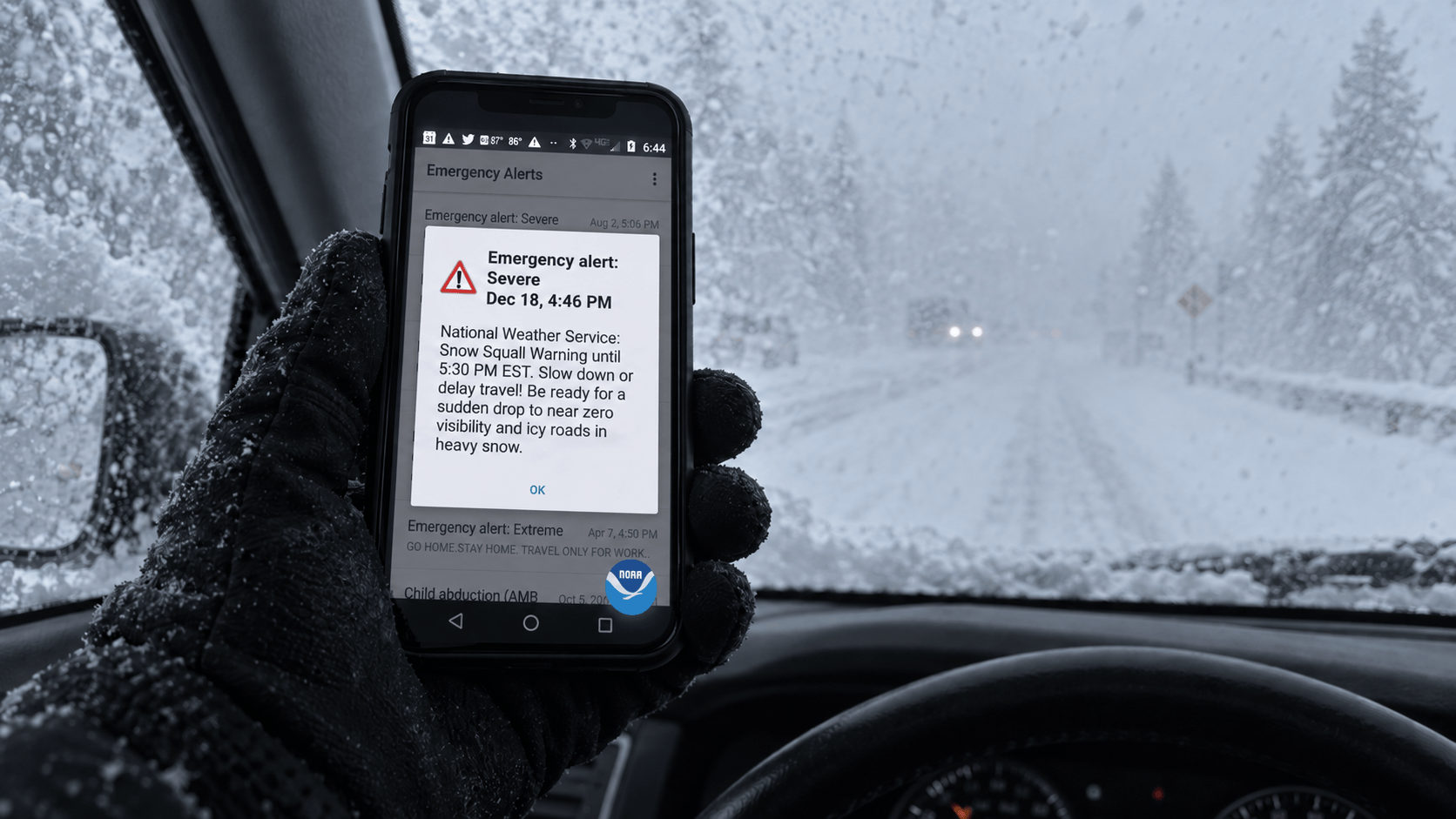
You don’t have to be hundreds of miles from home for a winter drive to become an emergency.
A dead battery, getting stuck in the snow, or rapidly changing weather can leave you stranded just a few miles from your front door.
You can’t control the weather, and you can’t predict every mechanical problem.
But you can take a little time before winter arrives to put some basic supplies in your vehicle and give yourself more options when something goes wrong.
And that’s what practical preparedness is all about.
Stay Safe Out There!
Have something you keep in your vehicle every winter that wasn’t included here? Share your suggestions in the comments on our companion YouTube video.
If you’re looking for additional preparedness equipment, be sure to check out my Prepper Gear List, where I share gear and resources I personally recommend.
Watch the video: 7 Things You NEED in Your Vehicle Before Winter Hits

 |
Prepper News Wire
All the newest prepper articles and videos from across the internet in one place.
|
CLICK HERE → |
Follow Plan and Prepared on various social media platforms for practical tips, new content, and real-world preparedness advice. Stay Safe Out There!


Get practical, no-nonsense preparedness tips, new articles and videos, plus free resources like the 72-Hour Emergency Checklist.
No selling. No sharing. No spam. Ever.
-

By: James L
A former outdoor survival instructor, I am a retired deputy sheriff who worked in a suburb of Oklahoma City. I was the operational commander of a multi-jurisdictional, multi-agency warrant task force. We specialized in locating and arresting dangerous and violent criminals. I was also a member of the USMS fugitive task force for 2 years. James has over 25 years experience in law enforcement, and is also a certified police trainer.
-
-
How to know when it is time to bug out (Updated)
6 Mistakes That Can Make You a Target During SHTF
Alpha-Gal Syndrome and Tick Bites: What You Should Know
Grey Man Strategy: Why Blending In Could Save Your Life
DIY Charcoal Water Filter: Emergency Filtration (Step-by-Step Guide)